About
On Sunday 20th September, in the afternoon, we reach the end of this journey through the evolution of tea culture and ceramics in China, devoting ourselves to the most recognised and significant protagonist of Chinese tea preparation: 盖碗, the gaiwan.
From the simple chawan bowls of the Tang era, we move to the first accounts of the addition of a saucer, narrated in the Yan Fanlu (演繁露) of the Song Dynasty. It is in the Ming era that the need to filter loose leaves led to the introduction of the lid, and during the Qing Dynasty the gaiwan took on the form that still reigns on our tea trays today, its spread becoming widespread across all levels of society.
Its three parts create a poetic and ideal connection, reflecting traditions, arts and the philosophical thought of a people. The gaiwan is not merely a simple object for tea, it becomes symbol and language: it appears in official portraits of prominent figures as the quintessence of national culture, enters the collective identity and the literary imagination, bearing witness to the depth of meaning it has accumulated across the centuries.
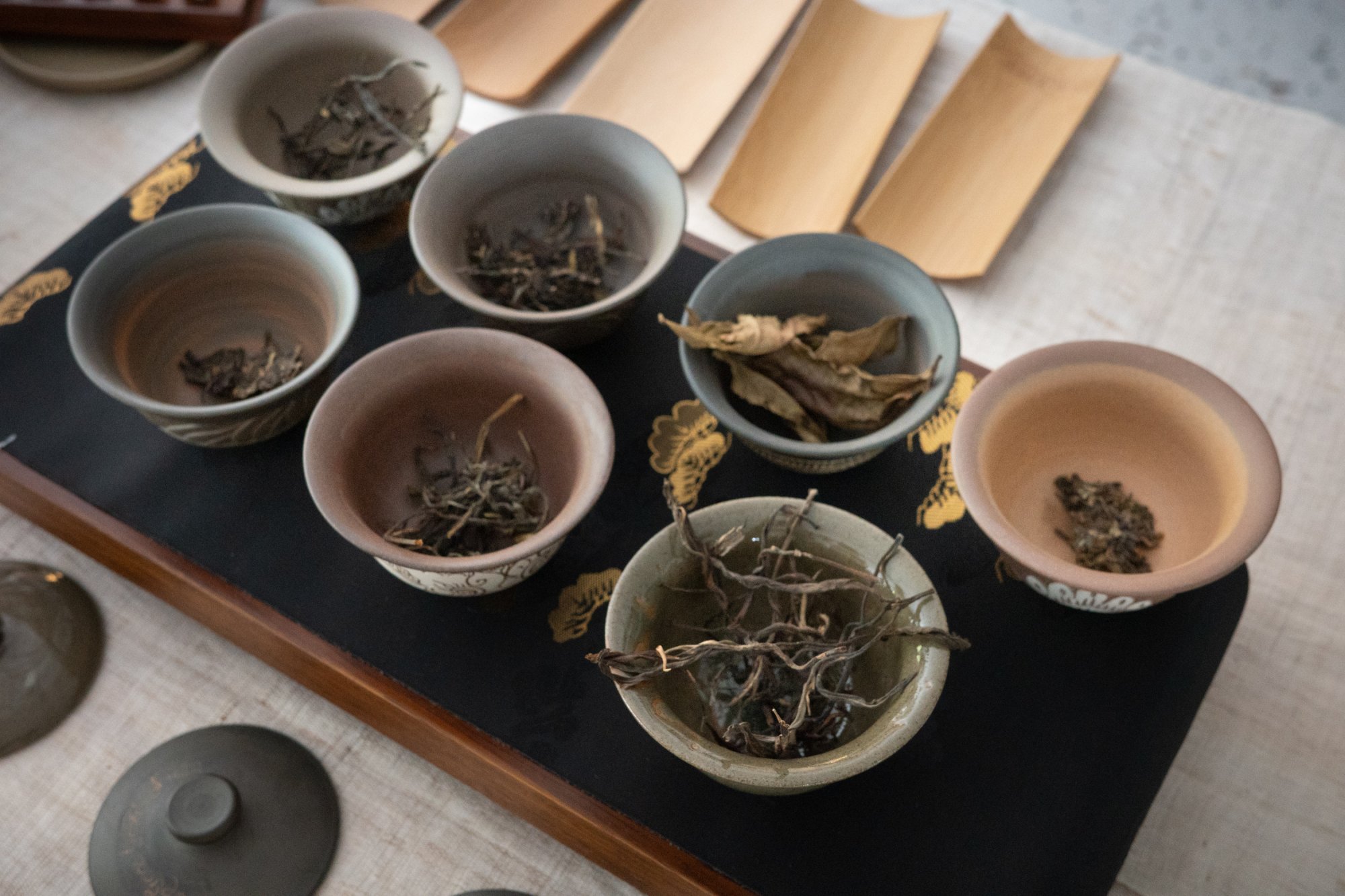
A selection of rare teas, chosen especially for the occasion, will accompany the narration of the evolution of tea and ceramics.